The winter swim across Lake Constance
Freezing water, no safety net and several kilometres of open water ahead – swimming across Lake Constance in winter is one of those challenges that pushes even experienced endurance athletes to their limits. This is precisely the challenge Nik Linder, a German freediver and brand ambassador for DAVOSA, is taking on. Having completed a full circumnavigation of Lake Constance in 2022, this time he is taking a more direct, uncompromising route: straight across the lake, in temperatures around freezing. Nik Linder demonstrates what happens when physical exertion, mental strength and a fascination with the extreme come together.
After swimming around Lake Constance in 2022, I didn’t feel like taking on a new challenge for quite some time. In 20 days, I swam around Germany’s largest lake. In doing so, I covered an official marathon swimming distance of 10 km almost every day. It was unusually cold in September 2022, and afterwards I’d had enough of cold water and damp nights in my leaky one-man tent.

The idea behind the winter crossing
But now it was time for another challenge. I hadn’t come across any reports of anyone ever swimming across Lake Constance in winter. Whether that was actually true didn’t really matter to me, though it certainly makes a difference to take on something that not everyone can do. It would certainly be a personal challenge.

Start in wintry conditions
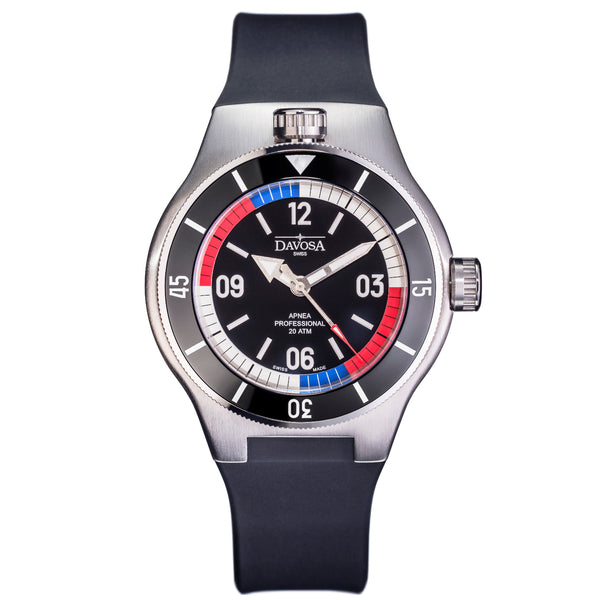
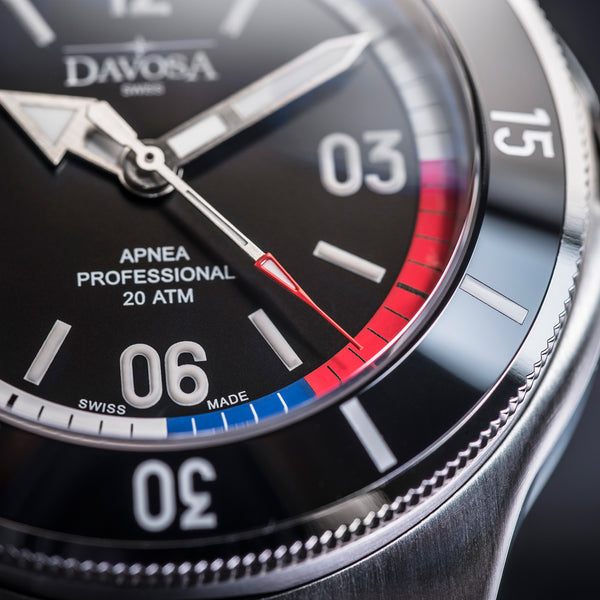
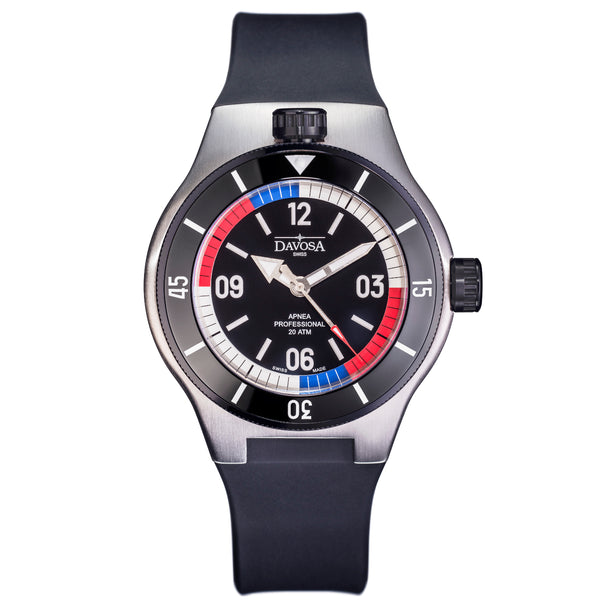
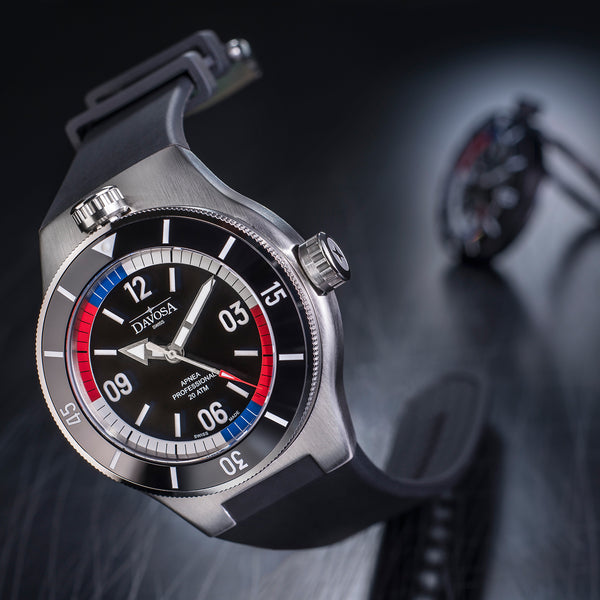
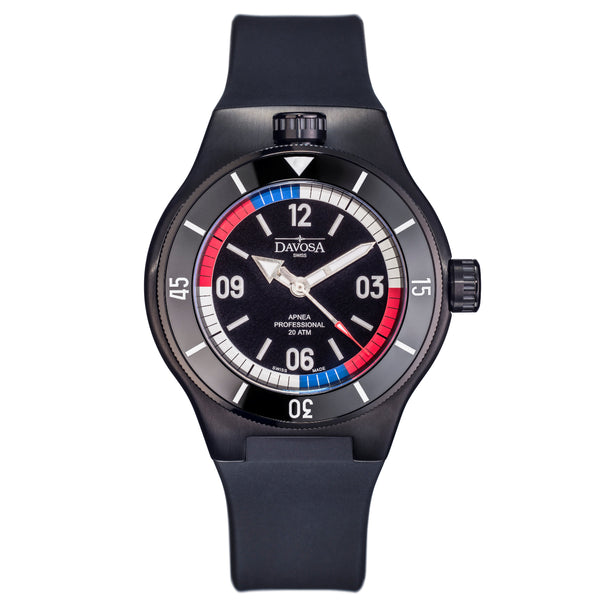
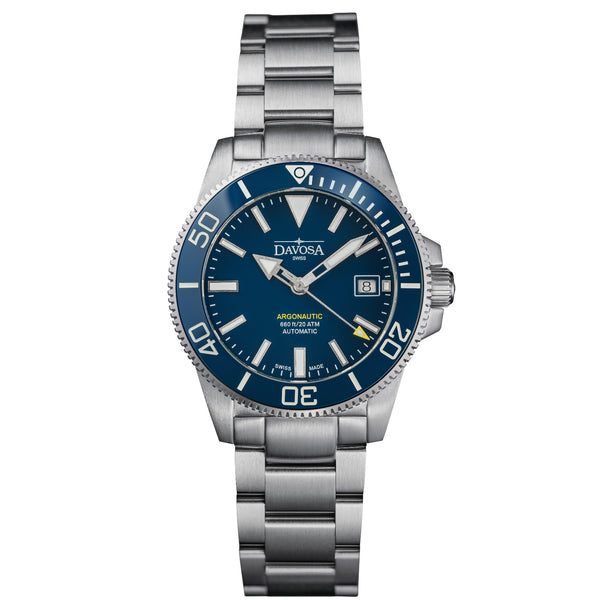
The water and air temperature was 6 degrees when I met up with Maik, a fellow sea trekker and friend, in Meersburg on Lake Constance. We now had 5.4 km of freezing-cold Lake Constance water ahead of us. We swim about 2 km an hour, so we were looking at 2–3 hours of swimming. What made it special was that, once again, we were doing it without any support. We had our Seatrekking bags with us. They held our clothes and a few energy bars. There would be no support boat; we had to navigate ourselves and stayed close together so we could be seen more easily by passing vessels. It was 10 am when I looked at my Davosa Apnea Diver watch and we felt the bottom beneath our feet for the last time.

Taking the plunge
Equipped with flippers and hand paddles, we swam towards Konstanz. The cold is particularly unpleasant at the start, but over time your body gets used to it and eventually everything goes numb. We chose a pace that was fast enough to keep us from getting cold, yet slow enough to sustain for several hours.
This time, everything was different
Three and a half years ago, during my circumnavigation of Lake Constance, I always stayed close to the shore. On the one hand, because the aim was to swim around the lake and explore as many bays as possible, and on the other, to keep out of the way of shipping traffic, which was only allowed to come alongside the shore and otherwise had to maintain a certain distance.
Now I was crossing the lake, and that naturally entailed dangers, which were heightened by the deliberate decision to forego external support in the form of a support boat. In an emergency, we couldn’t simply climb onto a boat to rest or be brought ashore in no time. Moreover, we weren’t easily visible to shipping traffic. Whilst the cold water certainly increased the danger and made hypothermia and cramps more likely, there was also an advantage: there were far fewer ships on the lake today than in summer.

Focus and flow
If you swim close to the shore, everything is a bit more interesting. There are fish, plants, shells and tree trunks to see. When crossing, on the other hand, there’s nothing but grey-blue water. But with no distractions, it’s easier to slip into a trance or a flow. Only the occasional glance up out of the water to correct my course, adjust my speed to Maik’s, and scan the surroundings for ships and ferries broke the routine of the monotonous swim.

This monotony, which I had always so detested in life, I actually found truly beautiful here in the ceaseless, repetitive motion. My body was being challenged, and on top of that I was in the water, my element. The cold and the pain feel ‘muted’ here and are less of a nuisance. One mustn’t overstate this Lake Constance crossing, because even though the cold gnawed at our limbs and our hands and feet soon went numb, the wetsuit prevented us from getting completely chilled. This crossing and swimming in the freezing water were certainly a challenge, but not the sort that no one else could attempt. But that doesn’t matter – I’ve realised that such personal challenges are perfect for personal growth.
Even though I’ve broken a few world records in my life, I’ve never been happier after a sporting achievement than in 2002, when I turned onto the home straight of my first marathon in Dublin. Back then, just as now with the swim across Lake Constance, this performance came at the end of several months of preparation. I trained for the marathon for almost a year and went from being someone who absolutely hated jogging to a marathon runner. I was fitter and had more stamina than ever before in my life. It was much the same with the Lake Constance crossing. As I knew I wanted to swim the route in February, I experienced a very different winter to usual. I went ice bathing, ice diving and ice swimming.

I spent the last few winters mostly indoors in the warmth, and in doing so I missed out on the beautiful surroundings I’d been missing all those winter years. A sleepy, peaceful countryside; lakes that are completely packed in summer but were now utterly quiet and deserted in winter. Now that spring is here, I don’t need to try and get back into shape – after all, I didn’t stop training this winter.
My Davosa Apnea Diver watch read 12:15 pm when we felt solid ground beneath our feet again. We’d done it, and it had taken us just over two hours. Afterwards, we had a coffee and treated ourselves to a slice of cake. We were delighted, because apart from our newfound love of cold water, this challenge had another bonus: you feel proud of what you’ve achieved and happy to have completed this difficult project. Afterwards, some of the things that weigh you down in everyday life don’t seem quite so dramatic anymore.